Every number, where it came from.
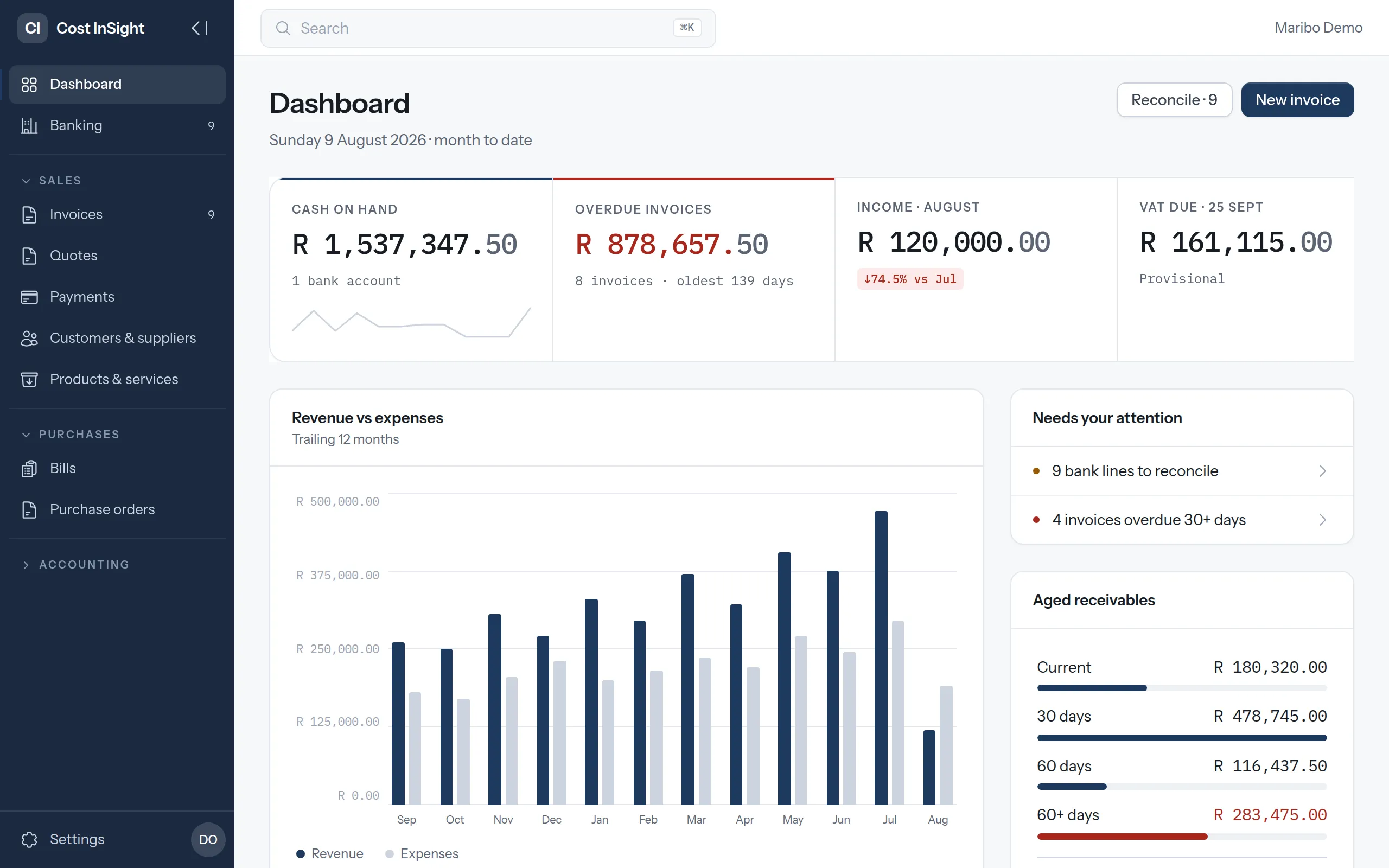
Invoicing, VAT and bank reconciliation in one ledger. Cash on hand, overdue debtors and the VAT you owe — on one screen, correct at the moment you look.
No card required · Every feature during the trial · Cancel any time
- POPIA compliant
- Data resident in South Africa
- VAT201 exports
- Double-entry general ledger
Most small businesses find out too late.
A spreadsheet tells you what you invoiced. It doesn't tell you which client is quietly funding itself on your cash flow, or whether the VAT you set aside will cover the return. Cost InSight closes that gap without asking you to become a bookkeeper.
Statements go out irregularly, ageing is guessed at, and the oldest debt is the one nobody remembers to follow up.
Output and input VAT get reconstructed at deadline from invoices and slips, instead of accruing correctly as you trade.
Payments land without a reference, get allocated by memory, and the difference is written off rather than explained.
One system, from quote to VAT return.
Nine document types that reconcile with each other — quote, pro-forma, tax invoice, credit note, statement, PO, delivery note, remittance, receipt.
Import statements from the major SA banks as CSV or OFX, match against open items, and keep a reconciliation you can defend line by line.
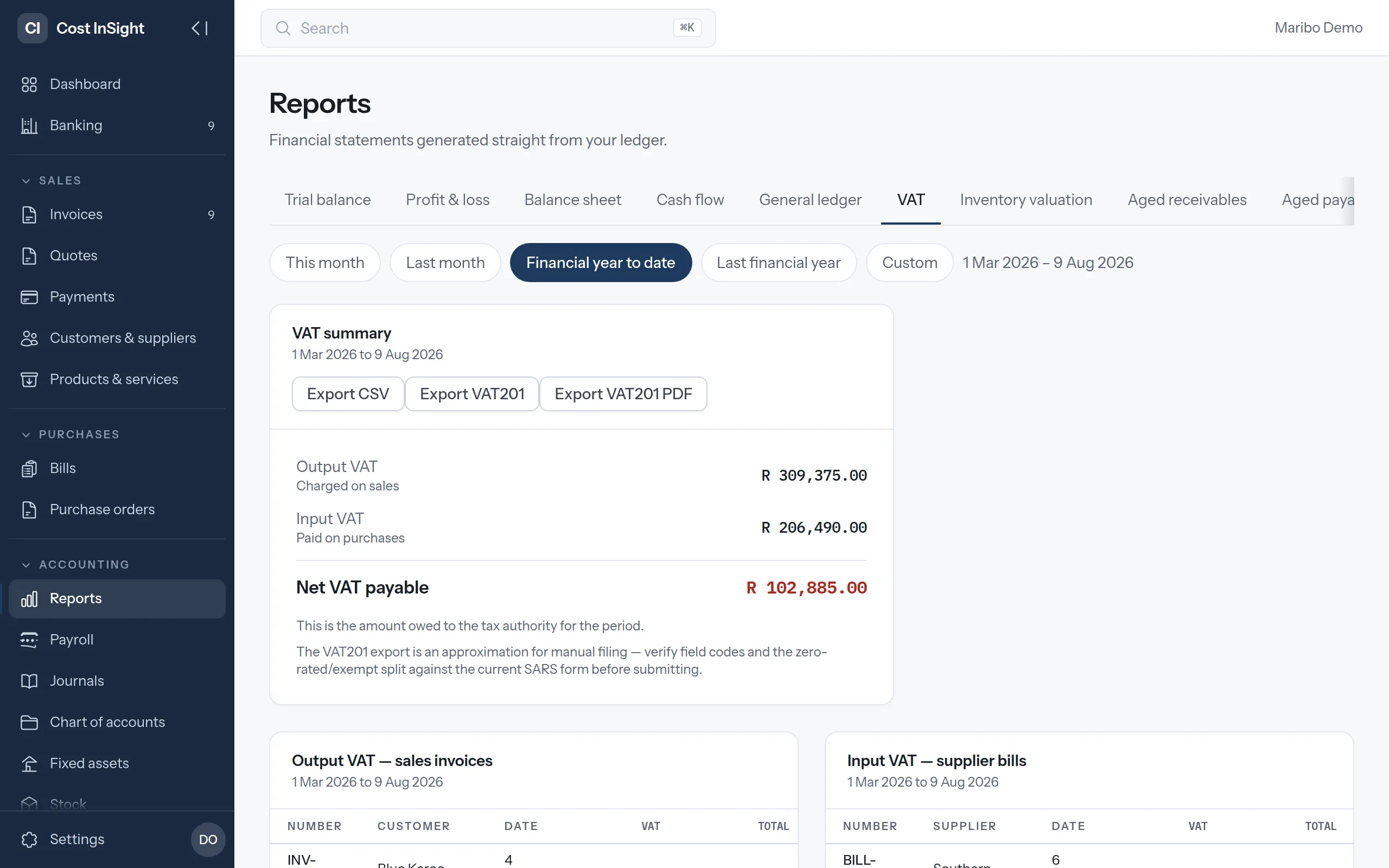
Standard, zero-rated and exempt handled per line, with output and input VAT summarised and a VAT201 export ready for filing.
Stock valuation, cost of sales and an asset register with depreciation posting straight to the ledger. Included on Business.
Unlimited users, each with a role: give a clerk invoicing only and your accountant the ledger. Every change is recorded in the audit trail.
Trial balance, profit & loss, balance sheet, cash flow and general ledger — every figure traceable to its source document.
Output, input, and what you actually owe.
VAT accrues from the documents you post, not from a scramble before the deadline. Pick a period, see the summary, and export VAT201 figures with the supporting invoice and bill listings behind them.
Nine documents that agree with each other.
A credit note knows its invoice. A statement knows its ledger. An ageing strip knows the same balance your customer sees. Change one number and everything downstream follows — because it's all the same ledger.
- D1Tax invoice
- D2Pro-forma invoice
- D3Credit note
- D4Quote
- D5Statement
- D6Purchase order
- D7Delivery note
- D8Remittance advice
- D9Receipt
Live in an afternoon.
- Step 01Company details
Registration number, VAT number, financial year end, logo.
- Step 02Chart of accounts
Start from an SA-standard chart and adjust, or import your own.
- Step 03Opening balances
Bring across debtors, creditors and bank as at your start date.
- Step 04Trade
Invoice, import your first statement, and watch it reconcile.
Common questions
Something not answered here? Ask us directly.
Yes — accountants work in the ledger directly, with journal entry, trial balance and full drill-through to source documents. Users are unlimited, so an accountant seat costs nothing extra.
Import your customers, suppliers, chart of accounts and opening balances from CSV. There is a guide for it, and we will help with the first import.
Nothing is deleted. You subscribe or export everything, and any unused trial days roll into your first paid month.
Yes. Every document posts a balanced journal, and the general ledger is visible rather than hidden behind summaries.
Try it against your own numbers.
Thirty days, every feature, no card. Import a real bank statement on day one and judge it on what it tells you.